
Fault Detection Algorithm for Gaussian Mixture Noises: An Application in Lidar/IMU Integrated Localization Systems
NAVIGATION: Journal of the Institute of Navigation (2025)
Summary
This paper derives a chi-squared fault detector for Gaussian-mixture measurement noise and validates it in a lidar/IMU localization system.
Highlights
- The method transforms EKF residuals under GMM assumptions so they can be tested with a chi-squared statistic.
- CARLA-based lidar/IMU experiments compare Gaussian and Gaussian-mixture detectors under step and slope failures.
Figures
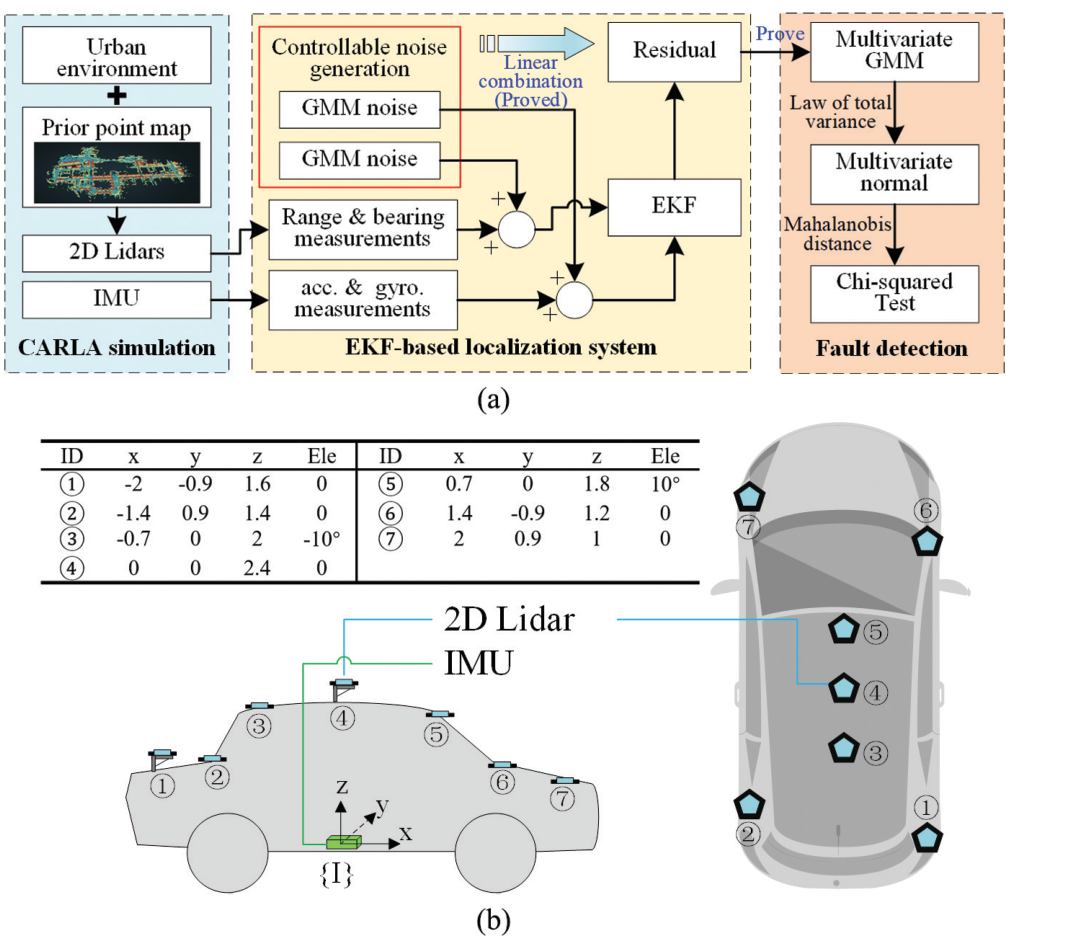
After deriving the residual transformation, the paper applies it to an EKF-based localization system with lidar range-bearing measurements and IMU propagation.
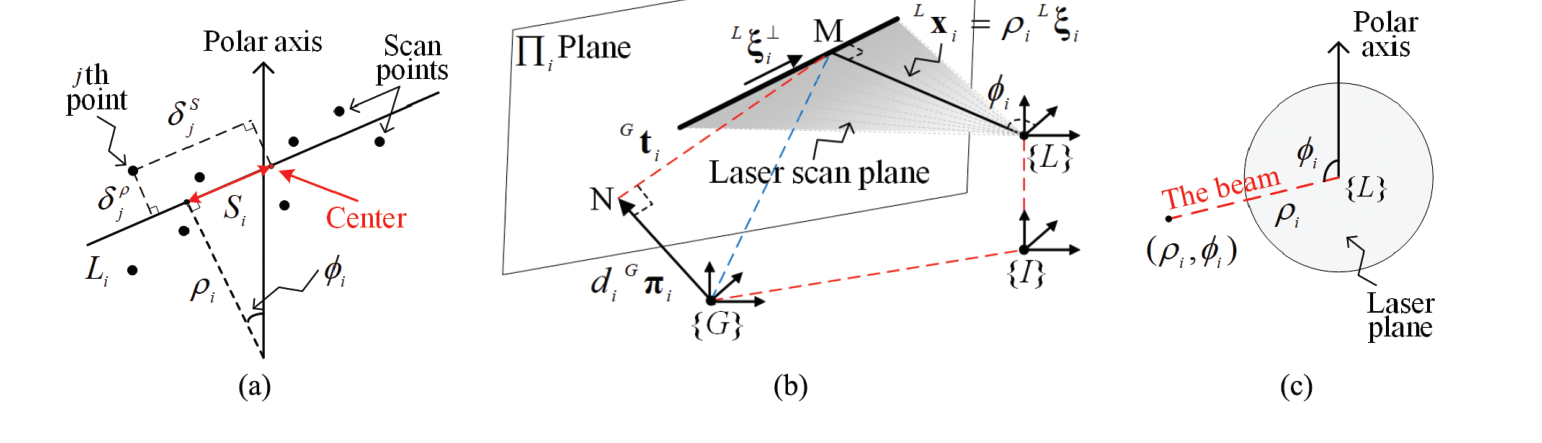
The lidar measurement model defines the residuals that later enter the EKF and the fault-detection statistic.
The controlled simulation platform supplies repeatable vehicle motion, map geometry, and configurable GMM-distributed noise for testing.
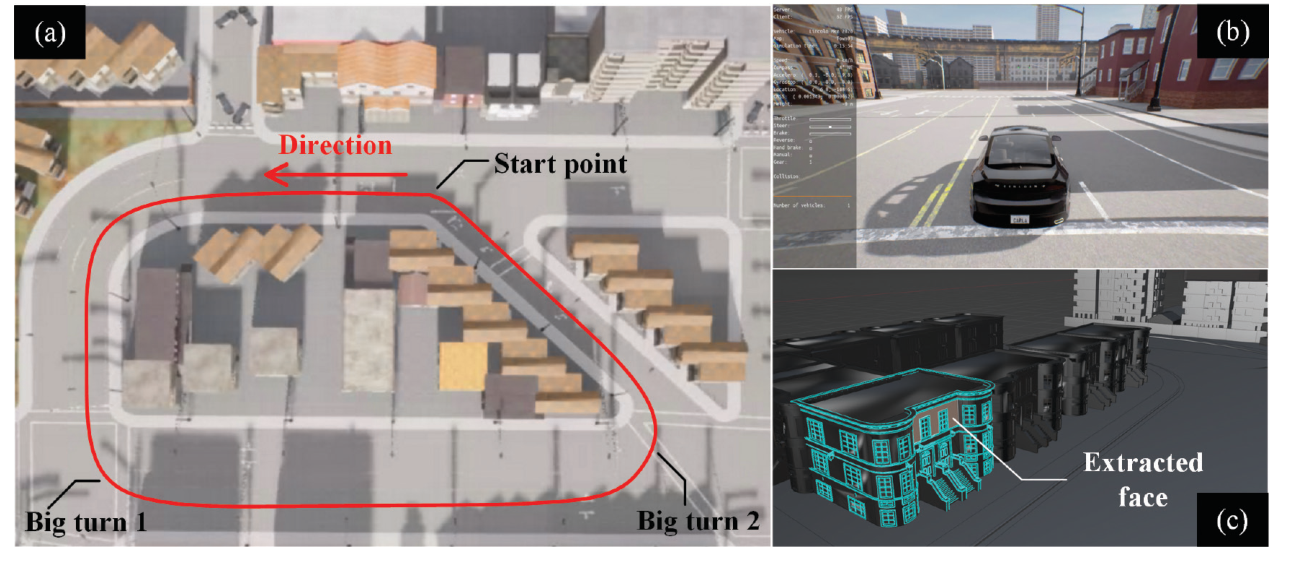
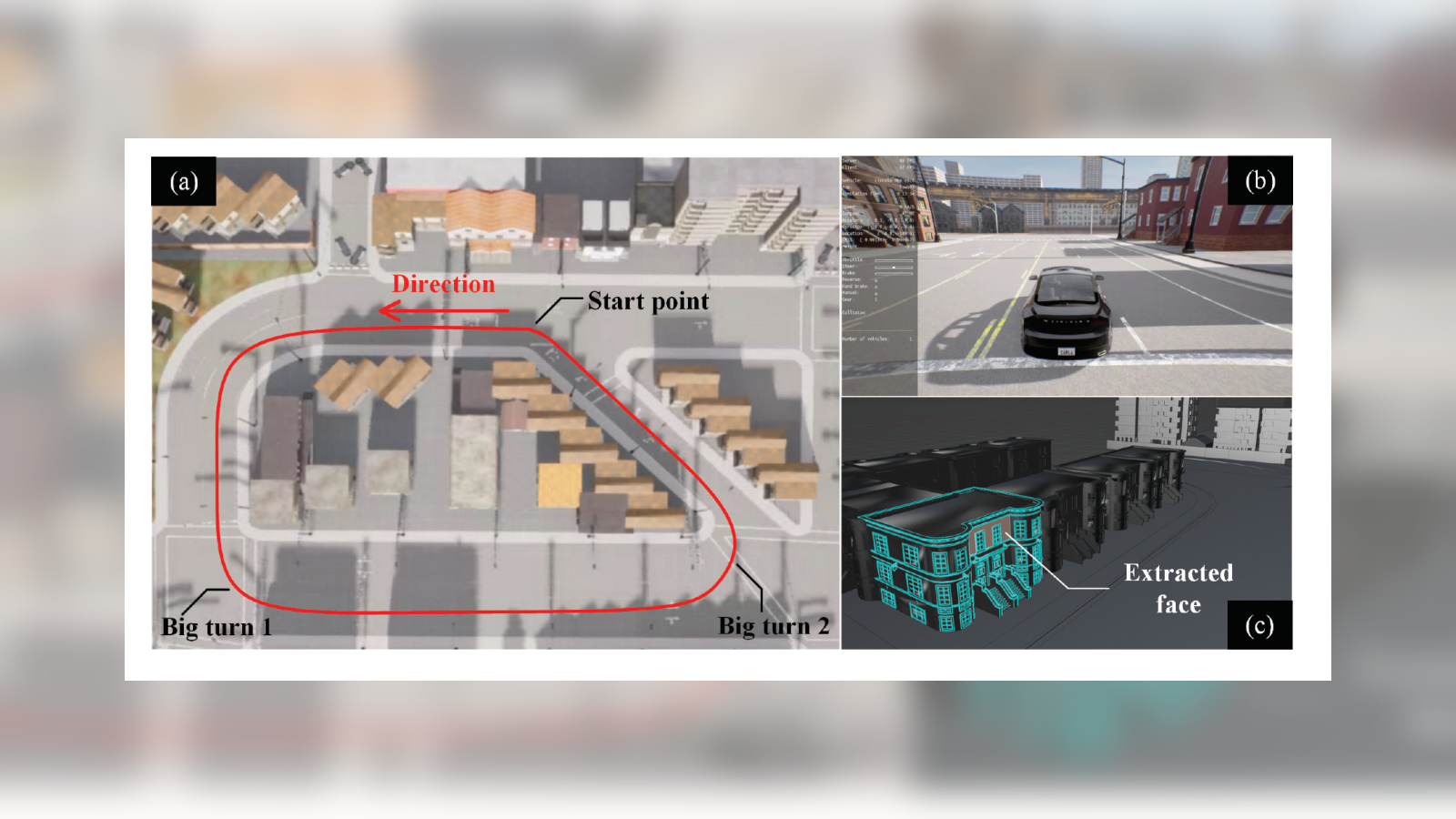
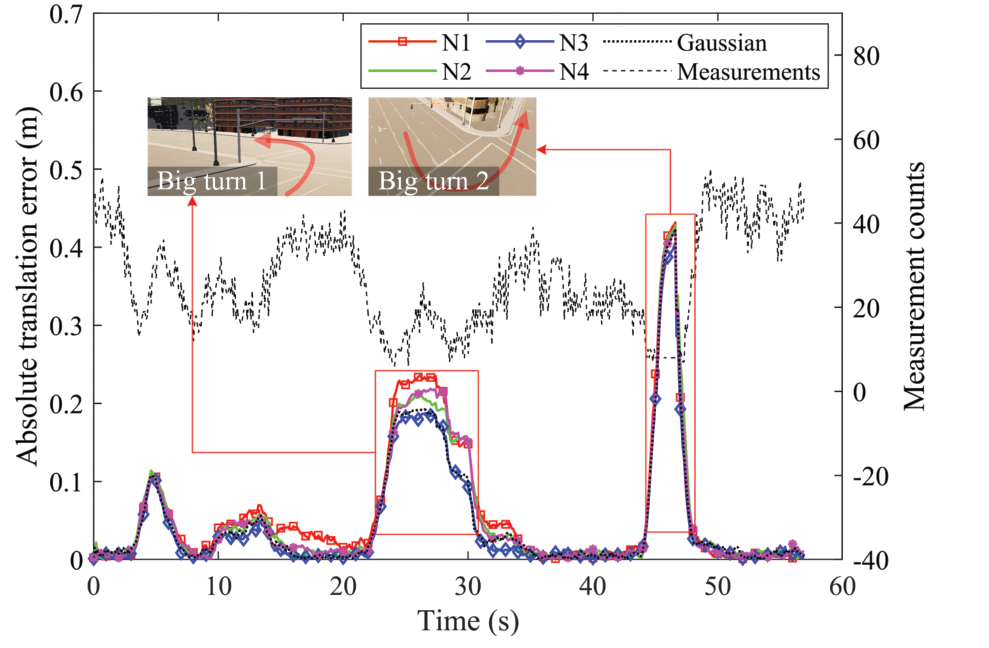
Before introducing faults, the paper shows where localization error grows in the simulated route, especially near large turns with fewer features.
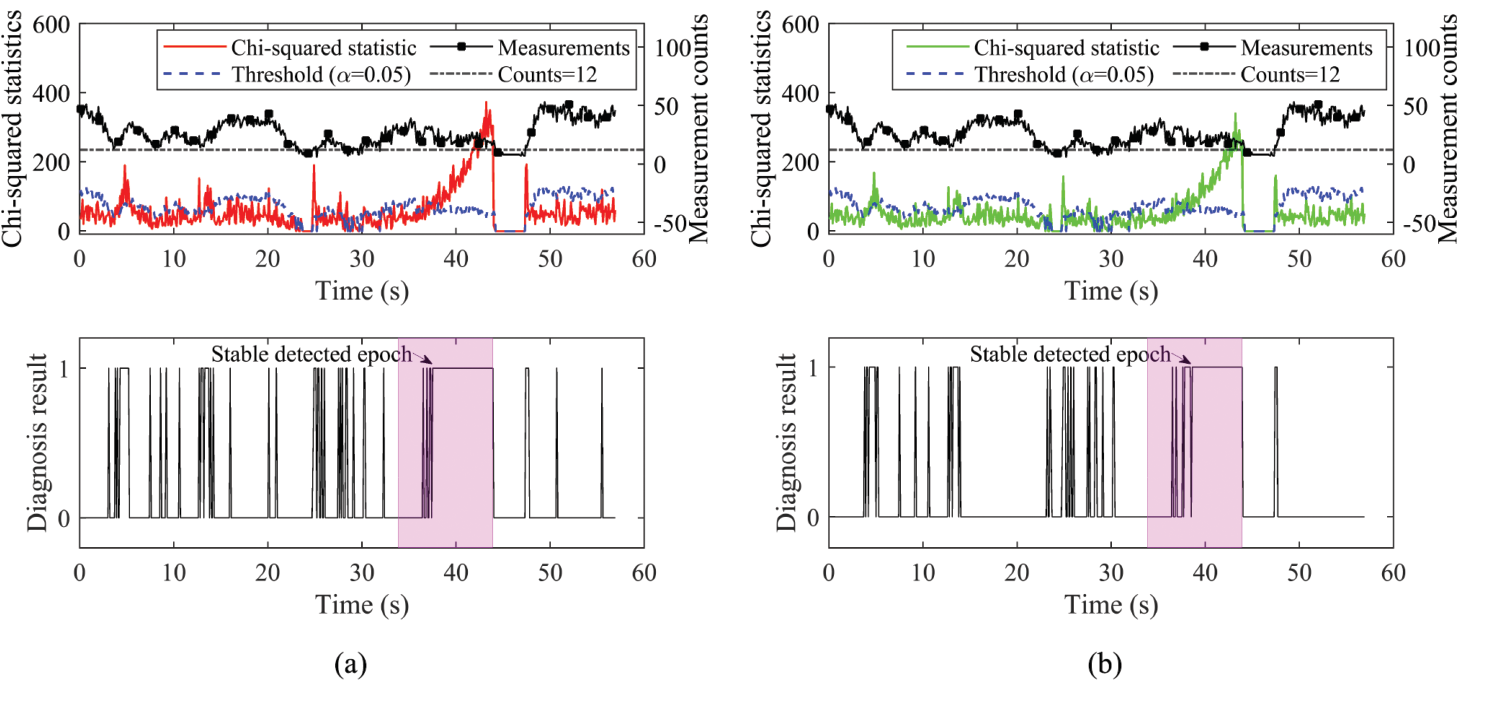
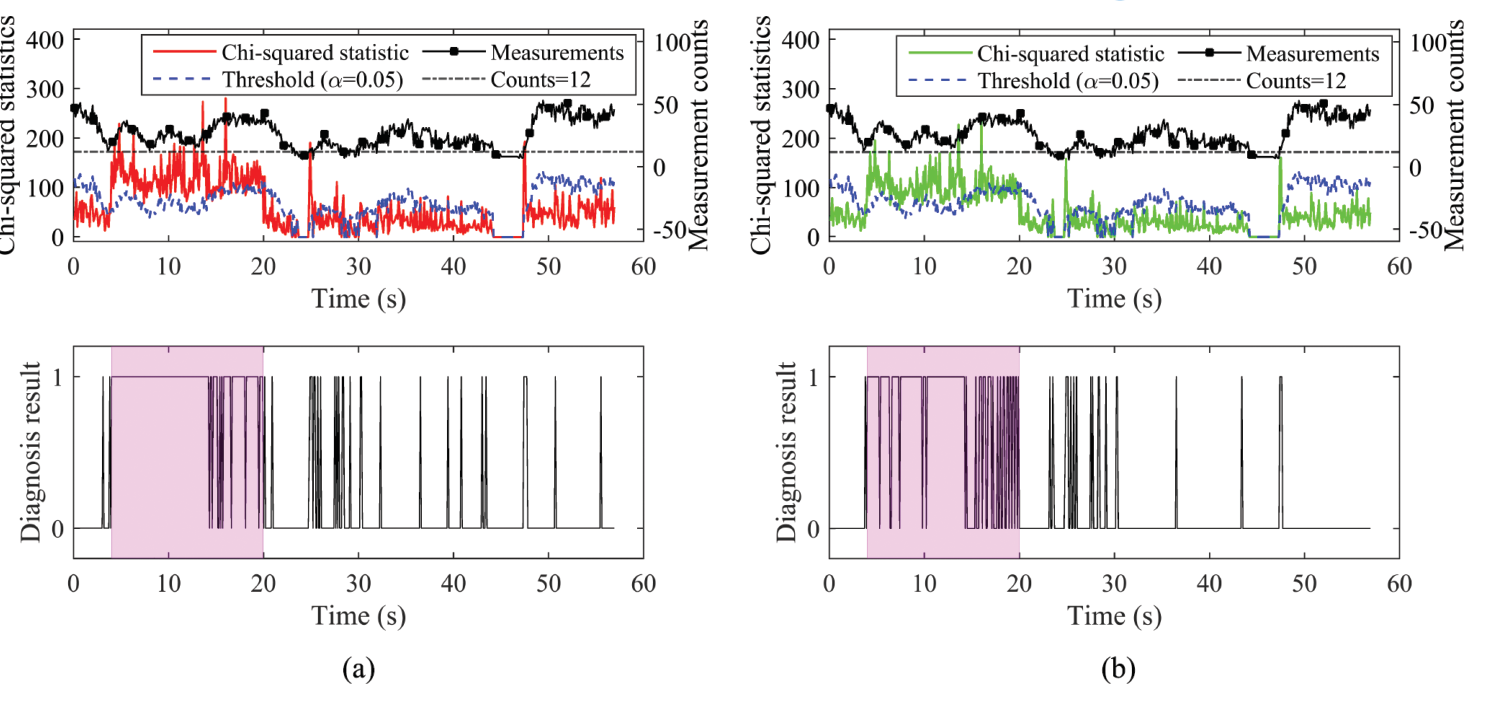
The step-failure experiment then compares whether the GMM-based statistic detects the shaded failure period more reliably than the Gaussian baseline.
The slope-failure case tests the same detector when the fault magnitude grows over time rather than appearing as a fixed step.