
Enhancing Smartphone-based Pedestrian Positioning: Using Factor Graph Optimization with Indoor/Outdoor Detection for 3DMA GNSS/Visual-Inertial State Estimation
Journal of Data Science and Intelligent Systems (2024)
Summary
This paper fuses smartphone 3DMA GNSS and visual-inertial estimates with an indoor/outdoor switching factor in factor graph optimization.
Highlights
- The system uses SVM-based indoor/outdoor detection to decide how GNSS and VINS measurements contribute to the graph.
- Hong Kong pedestrian experiments compare smartphone trajectories against LIO-SAM ground truth under indoor/outdoor transitions.
Figures
The SVM classifier turns GNSS features into an indoor/outdoor label that later controls the switching factor.

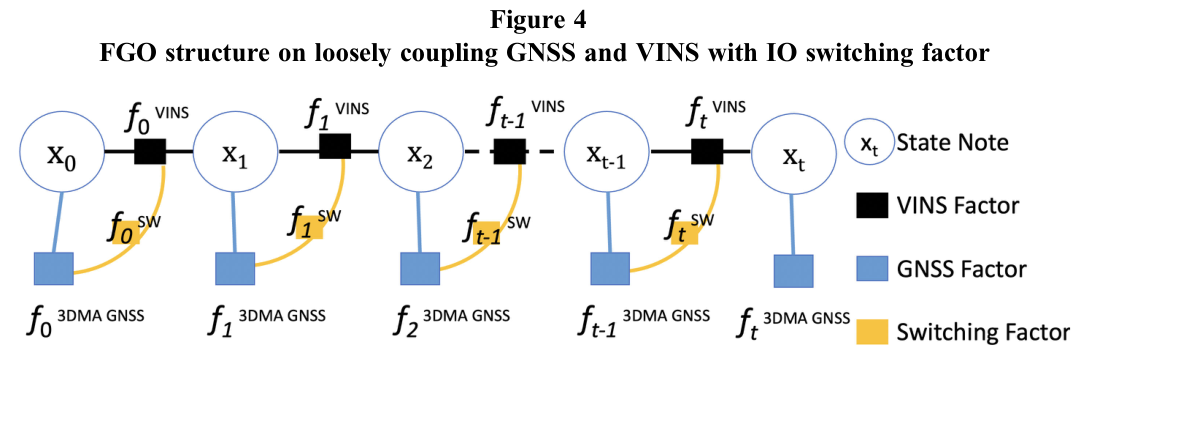
The factor graph shows where VINS, 3DMA GNSS, and the indoor/outdoor switching factor meet in the optimization problem.
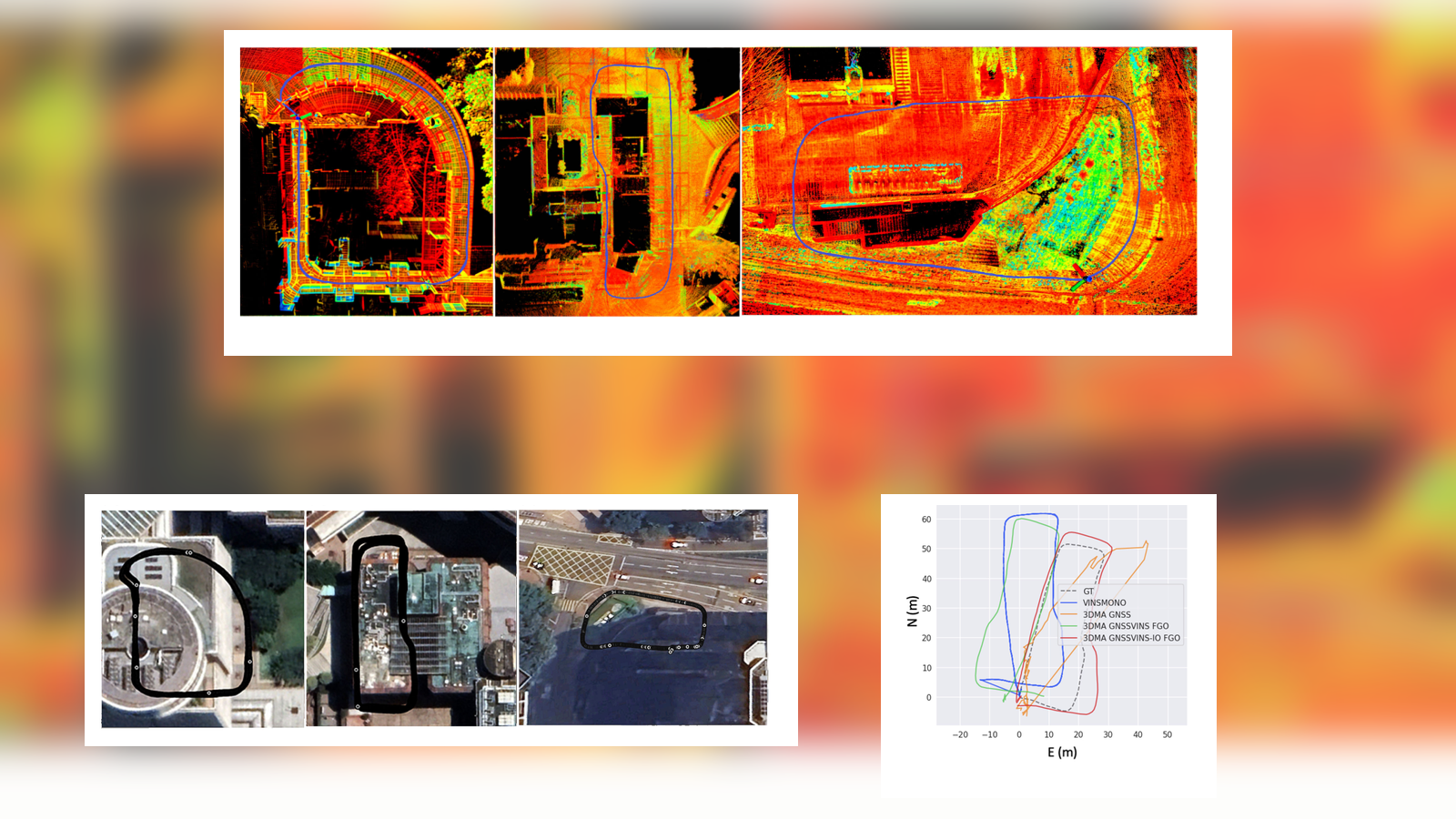
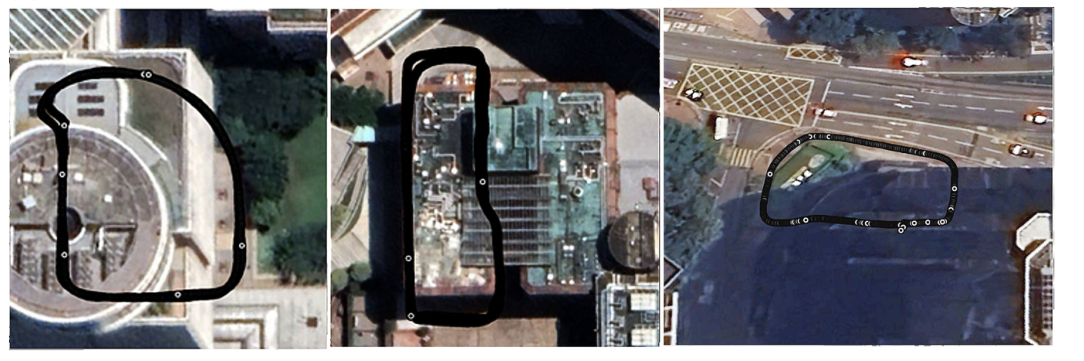
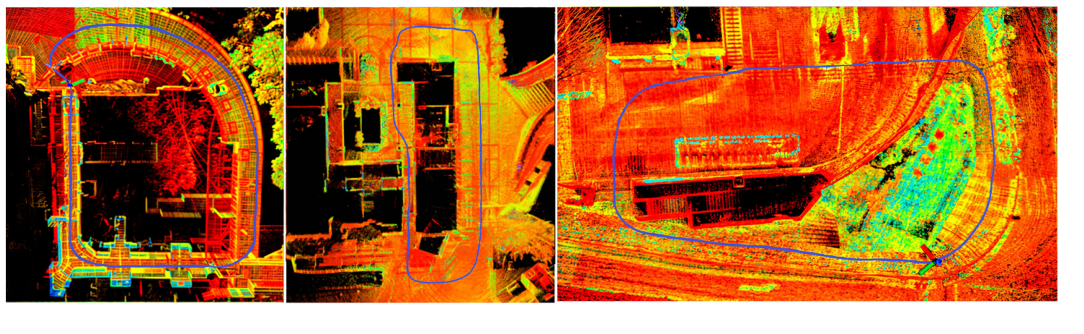
The experiment routes define the indoor/outdoor transition scenarios that are later used to compare algorithms.
The LIO-SAM ground truth anchors the trajectory comparisons and error plots that follow.
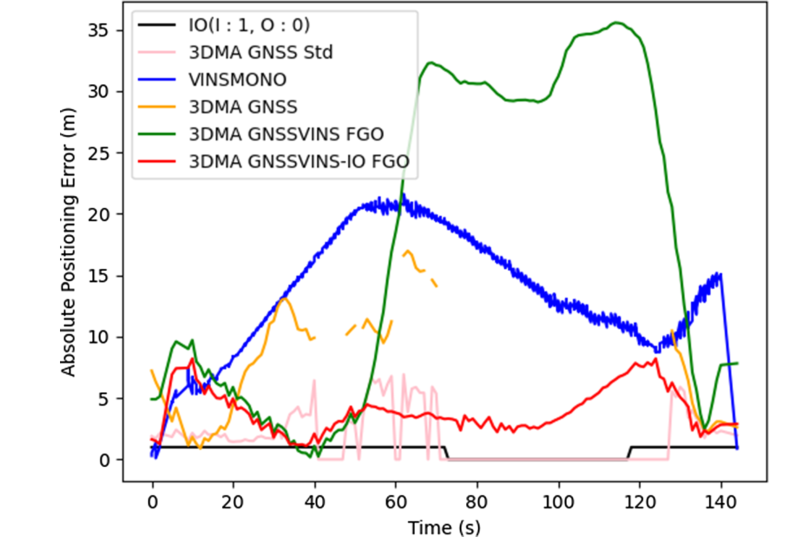
The B2 error plot highlights the transition period where the indoor/outdoor switch reduces the error growth seen in methods without the switch.
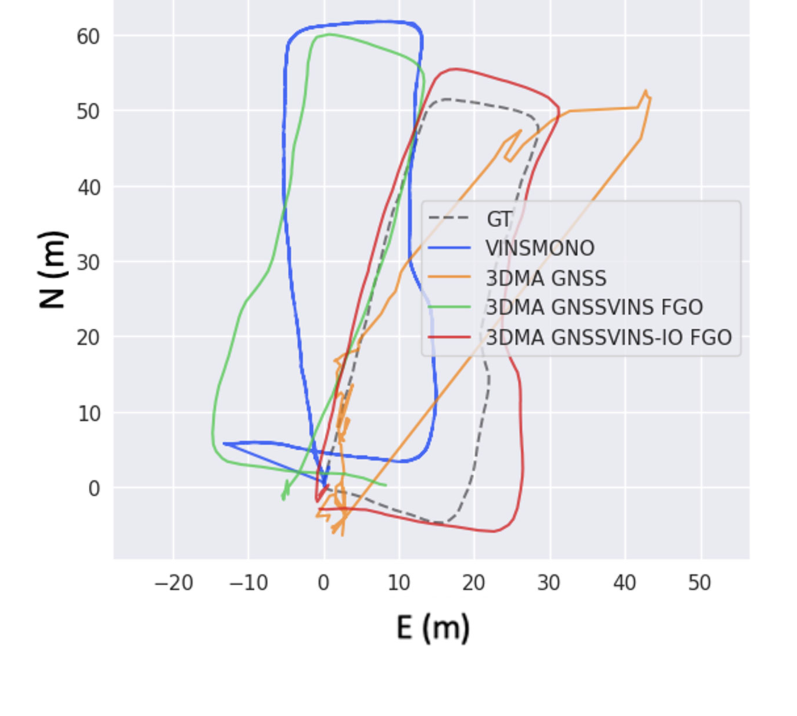
The companion trajectory plot shows the same effect spatially: the switching version follows the ground truth more closely during the transition.