

24 July 2026
student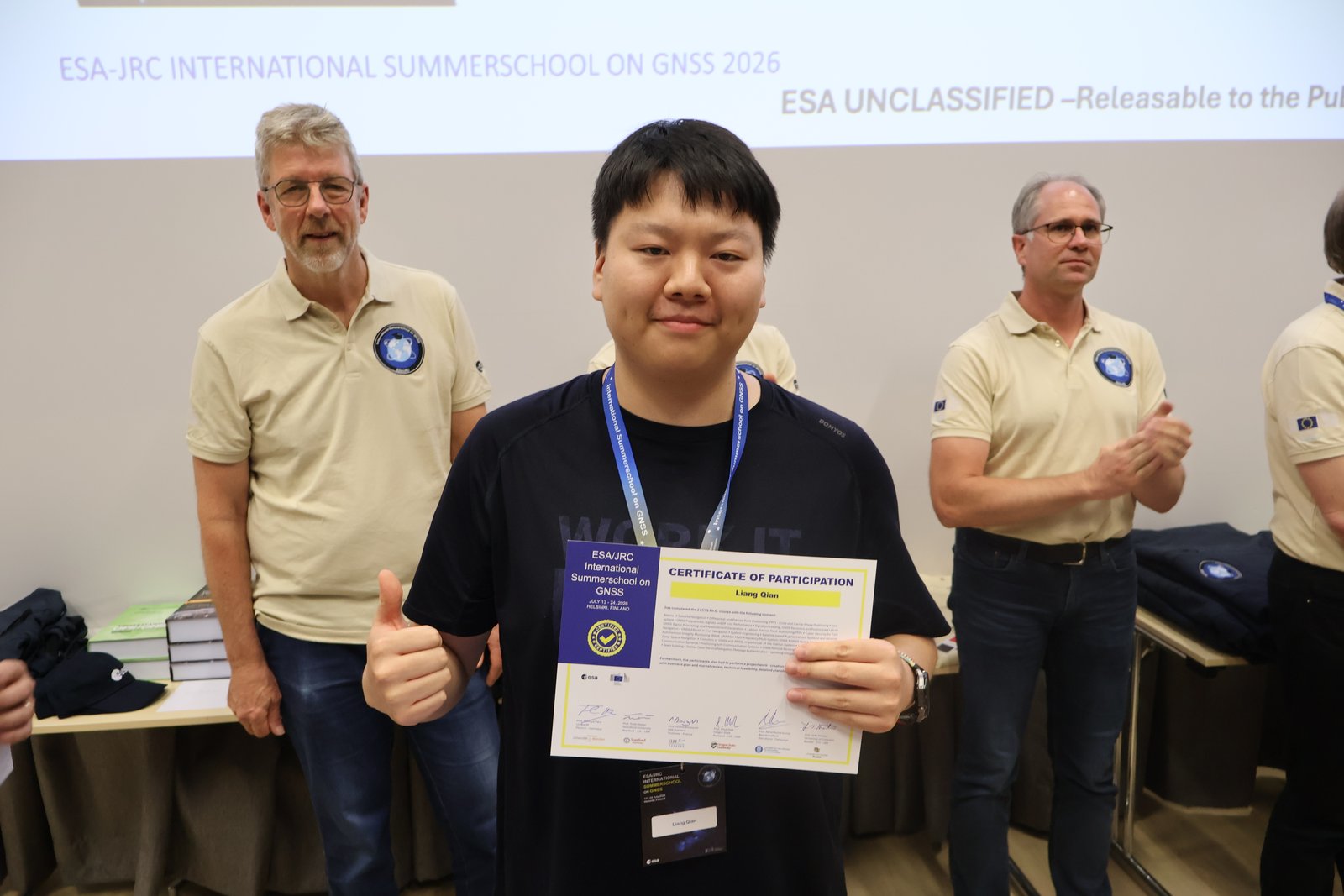
IPNL PhD student Liang Qian (Martin), supervised by Prof. Li-Ta Hsu, spent two weeks in July 2026 at the ESA/JRC International Summer School on GNSS in Espoo, Finland — a two-week programme for graduate students, PhD candidates, early-stage researchers and young professionals, jointly run by the European Space Agency (ESA) and the European Commission’s Joint Research Centre (JRC). At the closing ceremony he received his Certificate of Participation; below, in his own words, Martin shares what the two weeks covered, what his group’s project taught him, and how working alongside participants from many different backgrounds changed the way he thinks about research problems.
In Martin’s Own Words
This July, I had the opportunity to participate in the ESA/JRC International Summer School on GNSS in Espoo, Finland. Over two intensive weeks, the programme covered a wide range of topics, from GNSS signals, receivers and positioning fundamentals to signal processing, Precise Point Positioning (PPP), resilient PNT, LEO-PNT and future navigation technologies. The combination of lectures, practical sessions and discussions helped me connect many topics that I had previously encountered separately and gave me a clearer picture of how signals, algorithms, systems and applications fit together.
One aspect I particularly enjoyed was the diversity of the participants. Students and young professionals came from different countries and very different research backgrounds, which meant that the same problem was often approached in quite different ways. Some naturally focused on signals and measurement principles, while others thought more about hardware, system implementation, data processing, remote sensing or practical applications.
This became especially clear during our group project. We started from the idea of using reflected GNSS signals to monitor soil moisture, but the discussion soon went far beyond the original measurement concept. We had to think about how sensors could be deployed, how the data should be processed and interpreted, how the approach compared with ground sensors, satellite observations and drones, and, ultimately, how the measurements could be turned into information that would actually be useful for irrigation decisions.
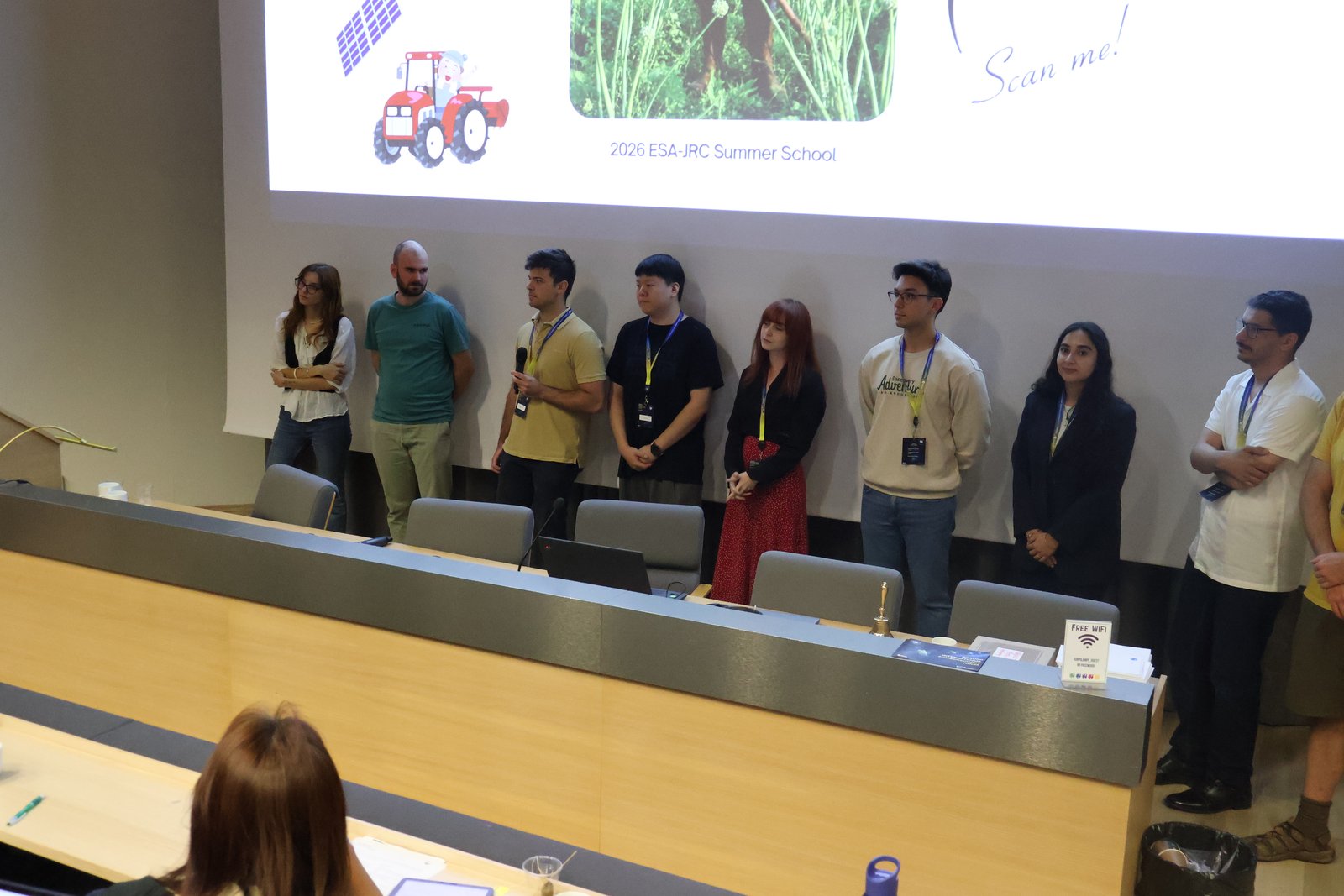
I found this process particularly valuable because different people tended to notice different parts of the problem. Something that seemed straightforward from one perspective could raise completely different questions from another: whether the data would be reliable enough, whether the system would be practical to deploy, what its real advantage over existing solutions would be, or what information a user would actually need. During the discussions, we constantly had to explain our reasoning, question some of our own assumptions and learn from areas in which other team members had more experience. The final idea became much more complete through that process than it would have been from any single perspective.
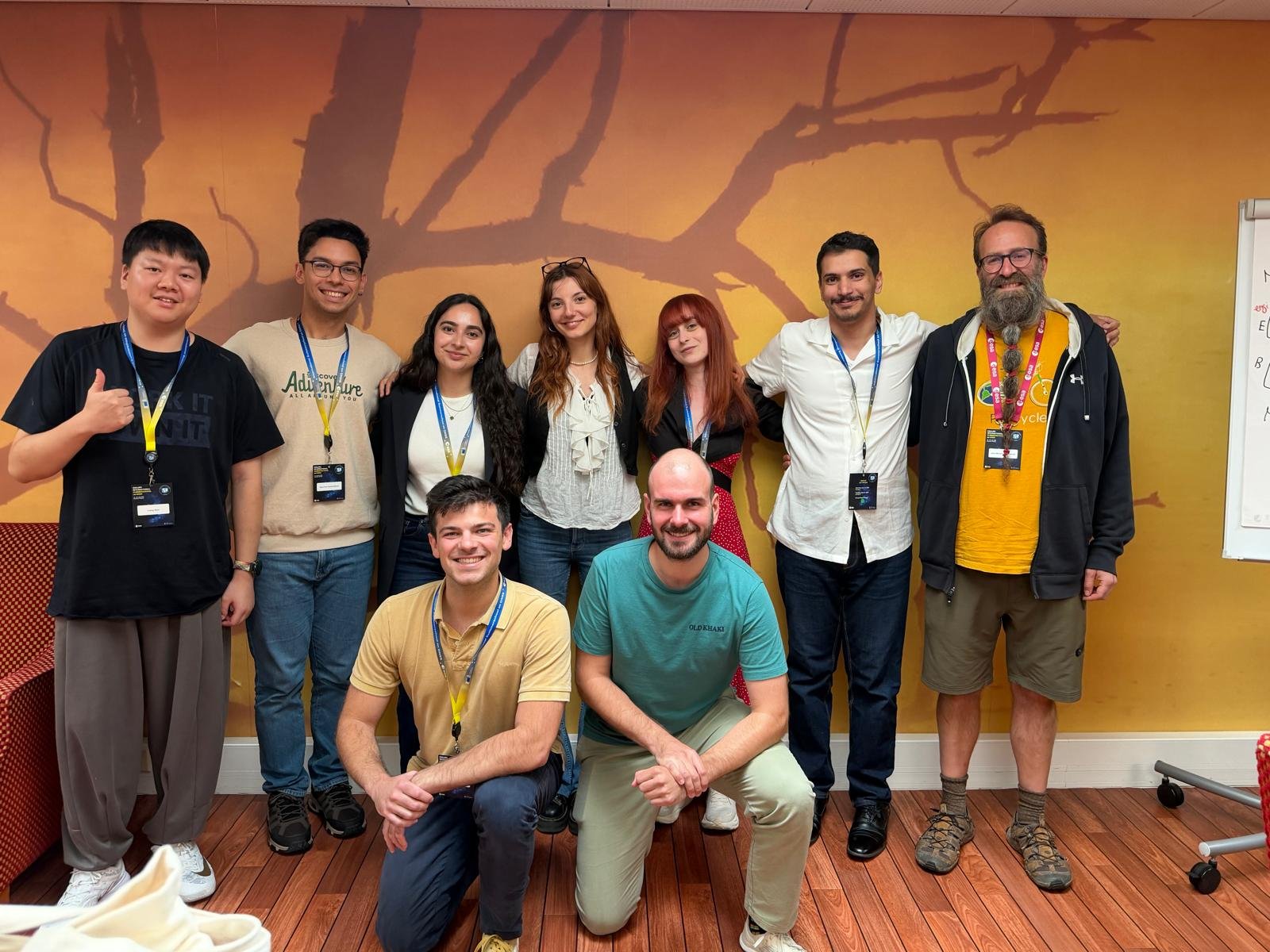
The experience outside the formal sessions was just as memorable. Spending two weeks studying, working and living alongside people from around the world naturally led to many conversations beyond the classroom. We talked about our own research, the problems we were working on, and how we each viewed the future of GNSS, PNT and space technologies. Even though our research interests were not always the same, those differences often made the conversations more interesting and gave me perspectives that I would not normally encounter in my own work. I was also very glad to make new friends from different parts of the world.
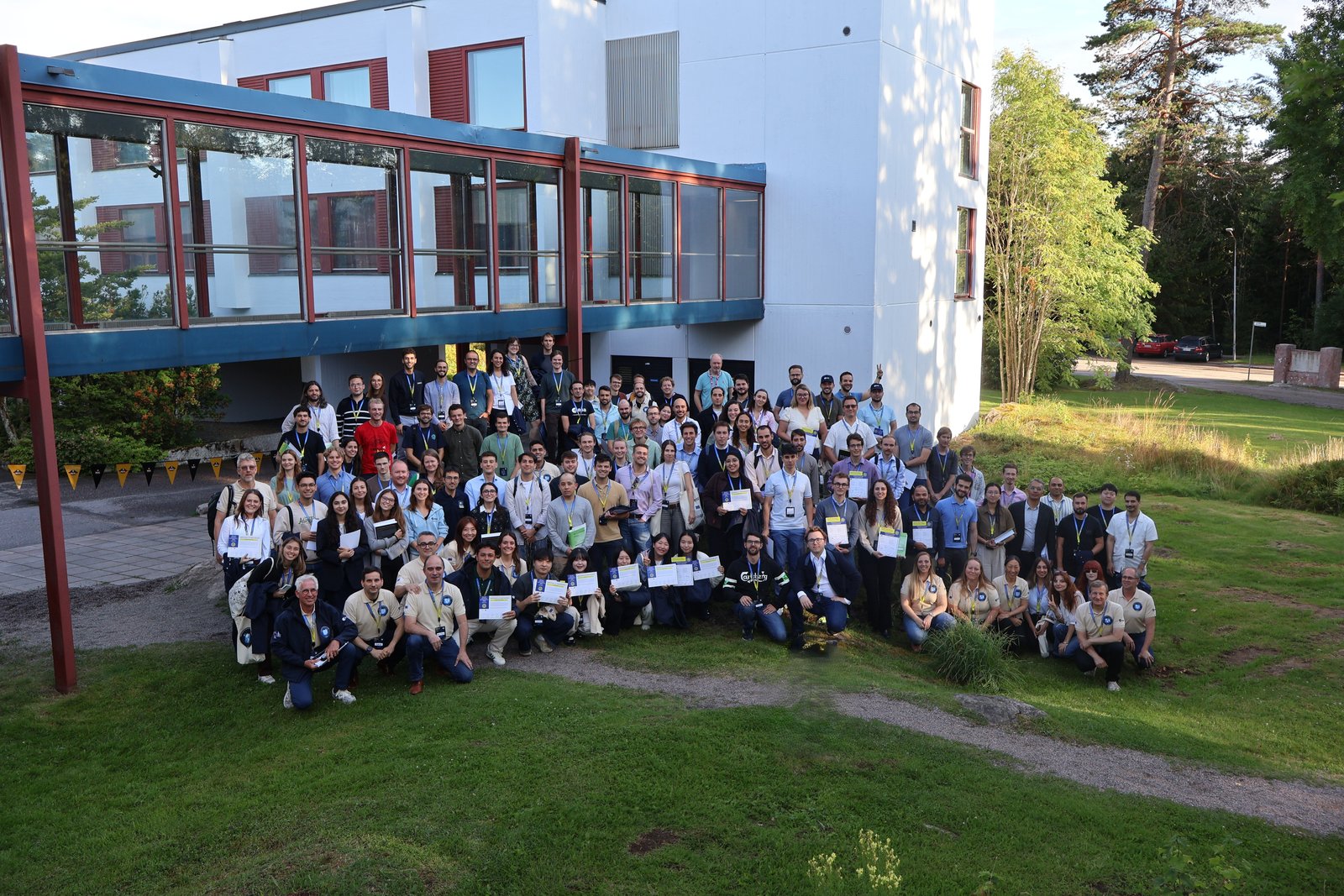
Looking back, what I take away from the summer school is not only a deeper understanding of GNSS and PNT. It also changed the way I think about technical problems. A research idea rarely ends with a signal, an algorithm or a single performance metric; it often continues into questions about data, systems, real-world constraints and the people who will eventually use the technology. Working with people from different backgrounds made those connections much more visible to me, and that is probably one of the most valuable things I will remember from these two weeks.
See Martin’s profile on the IPNL team page.